
Patrimoine · Vie rurale
Stone, terraces, and the houses they built
Across Sanilhac and its neighbouring valleys, dry-stone walls, terraced slopes, and farmhouses of local limestone shape the landscape. This heritage section follows how these structures were built, maintained, and still used today.
Vie rurale
Building with what the land provided
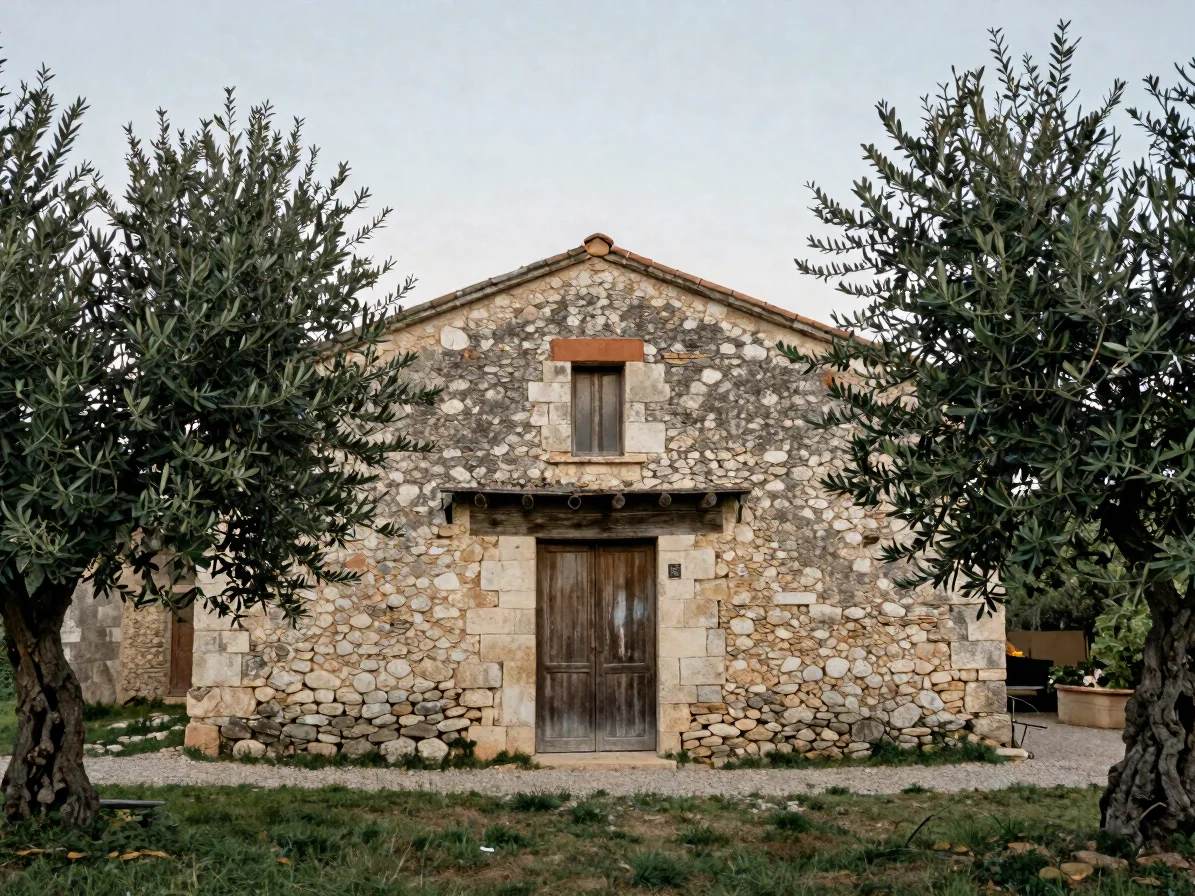
Vernacular structures in this part of Ardèche were shaped by practical responses to climate, soil, and water. Limestone was quarried close to the site, and walls were laid without mortar in many agricultural constructions, allowing rain to drain and frost to pass through the stone. Lintels, corbels, and stone roofs reflect generations of local know-how.
Rural life organised itself around these buildings: stone sheds for tools and harvests, terraces held up by carefully fitted walls, and village lanes that followed the contours of the hillside. Many of these practices are still maintained by residents who repair walls and roofs with the same materials and methods.
Terraces
Dry-stone terraces are living infrastructure, not only ruins to admire
Each restored wall holds back soil, guides water, and keeps a slope productive. Preserving these terraces means preserving the working knowledge that built them.